
Estate Planning | Probate Law | Business Planning
Estate Planning | Probate Law | Business Planning
What Is the Best Type of Trust to Protect Assets in California?
December 1, 2025 – Ali Talai

Living in California adds financial complexity. Property values rise and fall, businesses face changing risks, and families often juggle a wide mix of financial responsibilities. When you start thinking about long-term stability, you may wonder how to protect assets for your loved ones and future generations. You want structure, security, and a plan that keeps your intentions intact, even if life brings complications. That’s where strategic trust planning fits into the estate planning process.
Asset protection is different for every family. Your risks, your property, and the people you want to support shape the legal strategies you choose. At some point, you may look at the property and other assets you’ve built over time and ask “what is the best type of trust to protect assets in California.” This blog answers that question by outlining how asset-protection trusts work, why some structures offer stronger safeguards, and how an estate planning attorney helps you select the trust that supports your goals.
At a Glance
- Revocable living trusts support probate planning but do not protect assets from creditor claims.
- Irrevocable trusts offer the strongest protection under California asset protection rules by removing assets from your direct control.
- Special needs trusts preserve government benefits while safeguarding inherited property for a loved one.
- Life insurance trusts (ILITs) keep insurance proceeds outside your taxable estate and protect payouts for beneficiaries.
- Charitable trusts direct selected assets to long-term causes while supporting tax planning goals.
- Business trusts combined with LLCs provide layered protection for entrepreneurs and investors.
How Asset Protection Supports the Estate Planning Process in California
California residents often rely on trusts to strengthen the estate planning process. Trusts organize estate assets, streamline the probate process, reduce the chance of probate litigation, and promote long-term financial security. They also help shield personal assets from creditor claims and unexpected liabilities.
When you begin looking at asset protection strategies, you evaluate the structure of your estate, your tax exposure, and how different trust tools support your personal goals. You may own property in a high-demand region such as Los Angeles, operate a business, or manage investments tied to Silicon Valley. Your needs may also include care for a loved one with special needs, long-term support for beneficiaries, or protection for future generations. All of these factors influence how you safeguard assets under California law.
Revocable Living Trusts: Strong for Probate, Limited for Asset Protection
Revocable living trusts are a foundation for many California estate plans. You maintain control of assets, you can change the trust at any time, and the structure avoids probate. Your property passes privately and without additional court involvement, which simplifies administration for family members.
These trusts support organization, privacy, and efficient estate transfer. Because you retain control during your lifetime, the law treats assets in a revocable trust as your own, which means they do not shield property from creditor claims or financial liabilities. A revocable trust is not designed to safeguard property from lawsuits or other risks, but it remains an important planning tool for probate avoidance and clear distribution instructions.
Revocable trusts still play an important role in comprehensive asset planning. They act as the base of an estate plan and work well alongside irrevocable trusts, liability insurance policies, and business entities that provide stronger protection when asset preservation is a priority.
Irrevocable Trusts: California’s Primary Tool for Asset Protection
If your priority is to protect assets from creditor risk, an irrevocable trust is the most effective option available under California law. When you transfer assets into an irrevocable trust, you give up direct control. The trustee manages property under the trust’s terms, which is what creates a legal barrier between you and the assets.
Because you no longer own the property, creditors generally cannot reach it. Spendthrift provisions add another layer of protection by preventing beneficiaries from transferring their interest and by blocking creditors from attaching trust assets before distribution. For high-net-worth individuals, real estate investors, and families with significant business interests, irrevocable trusts offer structure that strengthens long-term protection and help address income tax exposure when structured appropriately. For maximum protection, irrevocable trusts should be established before any creditor claims arise, as California law allows creditors to challenge transfers made with intent to defraud.
These trusts require careful planning. Once you transfer property, you cannot undo the decision without legal consequences. Business owners commonly use these trusts to shield wealth from liability. Working with a California trust attorney helps you evaluate whether an irrevocable trust aligns with your goals, your family’s needs, and the size of your estate.
Specific Types of California Trust Structures Used to Protect Assets
California families use several types of trusts to protect assets. Your situation determines which option fits best.
Special Needs Trust
A special needs trust preserves government benefits for a loved one who relies on needs-based programs. This structure protects inheritance while maintaining access to essential support. The trustee manages distributions so the beneficiary can receive income and maintain long-term stability without losing Supplemental Security Income (SSI), Medi-Cal, and other needs-based programs.
Irrevocable Life Insurance Trust (ILIT)
An irrevocable life insurance trust holds a life insurance policy outside of your taxable estate. Families use ILITs to reduce estate taxes, shield payout proceeds from creditor claims, and create funds that pass directly to beneficiaries. ILITs remain popular for clients looking for long-term financial security and structured wealth transfers that support future generations.
Charitable Trust
A charitable trust lets you dedicate assets to a specific cause while supporting long-term giving. It removes selected property from your taxable estate, creates structured benefits for charities, and may offer income tax advantages depending on how the trust is designed. Charitable trusts can work alongside other asset protection strategies by helping you direct wealth intentionally while preserving remaining assets for beneficiaries.
Business Owners and Real Estate Investors: Additional Layers to Protect Assets
Business owners, real estate investors, and clients who manage multiple business interests often combine trusts with business entities. Limited liability companies (LLCs) create separation between business obligations and personal assets. When paired with a well-designed trust, this structure helps you manage risk tied to rental properties, professional services, or ownership interests.
Insurance products also support comprehensive protection. Liability insurance policies address claims that trusts alone cannot cover. Trust accounts help track business and personal assets so you maintain clear boundaries as your estate grows.
Choosing the Right Trust for Your Situation
There is no single trust that fits all families. The right structure depends on your unique circumstances, your future goals, and the assets you want to protect. An estate planning attorney in California reviews property holdings, business interests, tax exposure, family dynamics, and the structure of your estate to determine the most effective path.
You may need one trust or a combination of trusts. You may also need business entities, liability insurance, or additional estate strategies that reinforce the protection you envision. Asset protection works best when your planning reflects your lifestyle and long-term priorities.
Frequently Asked Questions
Q: Does a revocable trust protect assets from creditors?
A: No. A revocable trust does not shield your property from creditor claims during your lifetime. You retain control of the trust, which means the law treats those assets as your own. A revocable trust supports probate planning and privacy, but it will not protect assets from lawsuits, medical debt, business liability, or other financial pressures. This is why California families often combine a revocable trust with additional structures when asset protection is a priority.
Q: Are irrevocable trusts the strongest tool for protection?
A: Yes. Irrevocable trusts offer the most consistent asset protection under California law because you give up direct control of the assets transferred into the trust. Once assets are no longer legally yours, creditors generally cannot reach them, and spendthrift provisions add another layer of protection for beneficiaries. Business owners, real estate investors, and families with long-term wealth planning goals commonly use these trusts to reduce exposure to claims.
Q: Can trusts help reduce probate exposure?
A: Yes. Most trust-based estate plans limit or fully avoid the probate process, which reduces delays, cost, and court involvement for your beneficiaries. Even if asset protection is your primary goal, using trusts to transfer property outside of probate creates practical advantages. It can also reduce the risk of probate litigation and keep estate details private, which is particularly important for families with multiple properties, business interests, or complex distribution plans.
Q: Does a trust protect my home from Medi-Cal recovery?
A: It can, depending on the type of trust you use and when the trust is funded. Medi-Cal may seek repayment from your estate after long-term care, which leads many homeowners to look for ways to keep real estate out of recovery claims. Some trusts limit exposure by changing how ownership is treated at death, while others do not provide this protection. The right approach depends on the structure of your estate, how your property is titled, and your long-term priorities for beneficiaries. Consulting with a California trust attorney early in your planning process helps you understand timing requirements and avoid costly mistakes.
Protect What You’ve Built With Talai Law Offices
At Talai Law Offices, an asset protection law firm serving Woodland Hills and Los Angeles, you work with California trust lawyer Ali Talai, LL.M., who structures revocable trusts, irrevocable trusts, complex trust arrangements, and business entities to support asset protection and long-term goals. Mr. Talai’s background in tax and estate law supports strategies that help families, business owners, real estate investors, and high-net-worth individuals preserve personal assets and support future generations.
Your plan may involve inheritance protection, charitable planning, succession planning, probate planning, or property structuring for long-term goals. Our approach integrates estate planning, tax law analysis, trust administration, and guidance for clients who want stable protection for loved ones and future generations.
We offer flat-fee services so you can speak with us as your assets or family circumstances change. If you want to explore strategies for safeguarding your estate, your business interests, or your property through trusts and related planning tools, call (818) 285-2850(818) 285-2850 or complete our confidential online form to schedule your consultation. Talai Law Offices assists clients throughout Southern California with planning grounded in California law.
At Talai Law Offices – we’re your attorneys for life.
Copyright © 2026. Talai Law Offices, Inc. All rights reserved.
The information in this blog post (“post”) is provided for general informational purposes only and may not reflect the current law in your jurisdiction. No information in this post should be construed as legal advice from the individual author or the law firm, nor is it intended to be a substitute for legal counsel on any subject matter. No reader of this post should act or refrain from acting based on any information included in or accessible through this post without seeking the appropriate legal or other professional advice on the particular facts and circumstances at issue from a lawyer licensed in the recipient’s state, country, or other appropriate licensing jurisdiction.
Talai Law Offices, Inc.
6300 Canoga Ave, Suite 550
Woodland Hills, CA 91367
(818) 285-2850(818) 285-2850
https://talailawstg.webteam.ai/
Contact Us
The Highest Quality of Legal Service

Estate Planning, Business Planning, and Probate Attorney
Ali Talai, Attorney at Law
schedule a call todayBlogs
Related Blog Posts

Sitting down to create or update your estate plan can be overwhelming. Crucial to a successful plan is your ability…
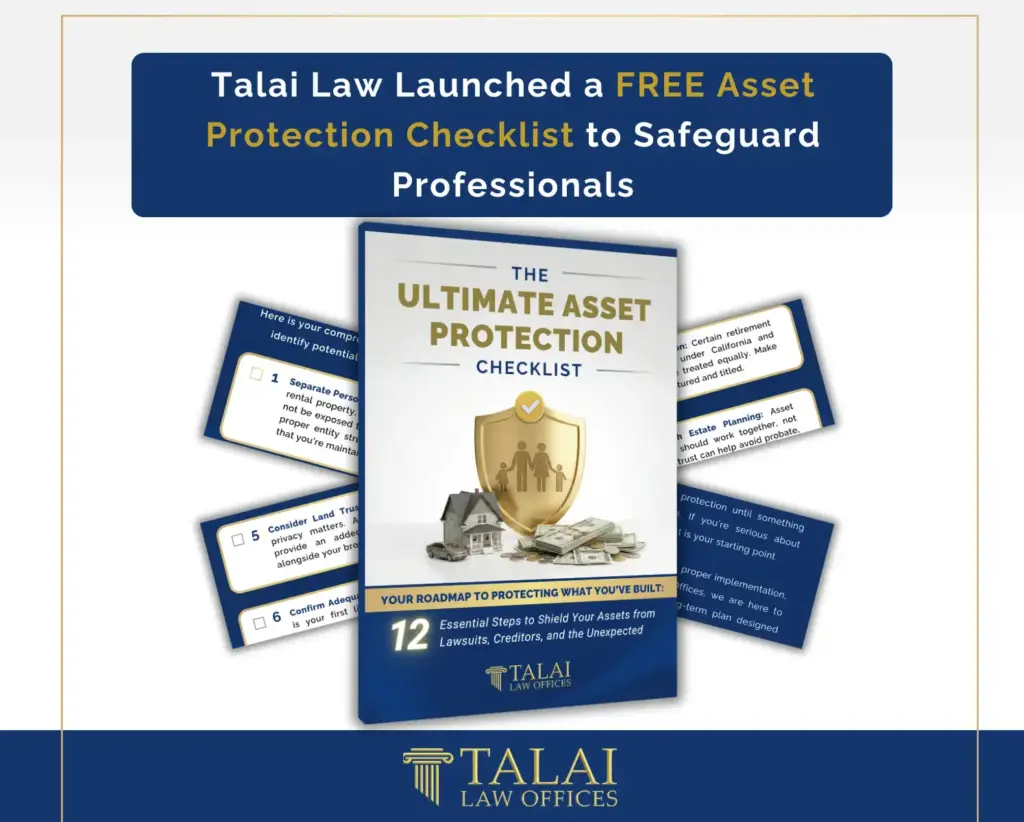
WOODLAND HILLS, California — Talai Law Offices, Inc. announces the launch of its free resource, “The Ultimate Asset Protection Checklist,”…

You can screen tenants, maintain your rental property, and still end up dealing with a lawsuit. As a landlord, you…

SUBSCRIBE TO OUR NEWSLETTER
Stay Informed and Connected
Stay Informed By Signing Up For Our Newsletter!
Contact Us Today!
Contact Us, & We’ll Guide You Through Your Next Steps!
<div class="et_pb_code_inner"><!-- Start Lawmatics Embedded Snippet -->
<iframe frameborder="0" scrolling="no" src="https://app.lawmatics.com/forms/embedded/51546b74-8f7f-400d-809d-f5cc1d3ad4f1" id="iFrameResizer0" style="width: 1px; min-width: 100%; overflow: hidden; height: 1167px;"></iframe><script id="lm-embedded-script">
!function(e,t,n,a,s,c,i){if(!e[s]){i=e[s]=function(){i.process?i.process.apply(i,arguments):i.queue.push(arguments)},i.queue=[],i.t=1*new Date;var o=t.createElement(n);o.async=1,o.src=a+"?t="+Math.ceil(new Date/c)*c;var r=t.getElementsByTagName(n)[0];r.parentNode.insertBefore(o,r)}}(window,document,"script","https://navi.lawmatics.com/intake.min.js","lm_intake",864e5),lm_intake("51546b74-8f7f-400d-809d-f5cc1d3ad4f1");
</script>
<!-- End Lawmatics Embedded Snippet -->
</div>